Milwaukee County / Fictional service call
From the service van
to the office.
A Franklin homeowner asks about a sump pump. The technician later returns with a check-valve service note. Try the two decisions a small plumbing office has to get right.
Use the sample records below. This walkthrough sends no messages and creates no accounting entries.
01 First contact
Who owes the homeowner an answer?
The sample request arrived at 9:00 a.m. A receipt can tell the homeowner it arrived. Only someone who checks the schedule can offer an appointment.
Office dispatcher owns the next check. No reply or booking has been recorded.
The example clock illustrates elapsed time. A live response target depends on the shop’s channel, staffing and measured delivery.
02 Field closeout
What does the ticket actually support?
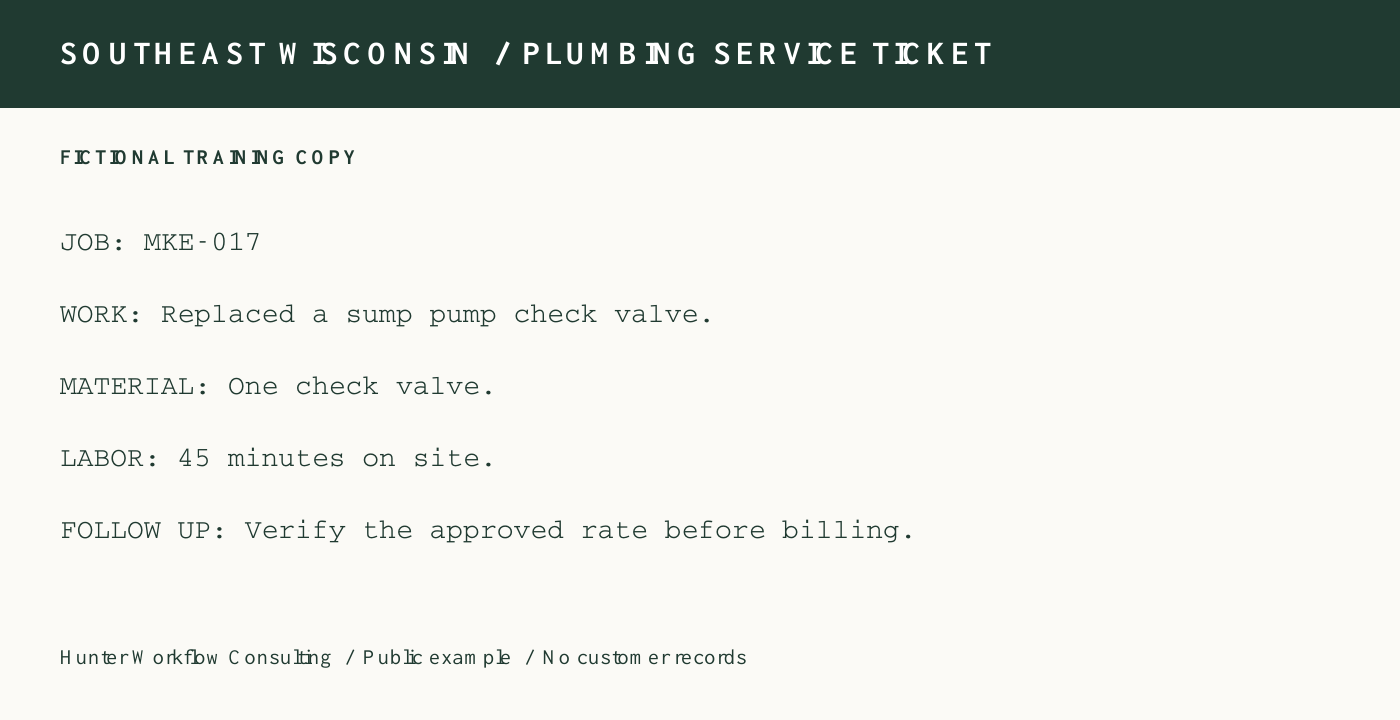
Read from the image
HWC ran this fictional ticket through optical character recognition. Compare the extracted fields with the image. The decorative header was misread in the raw output.
- Job
- MKE-017
- Work
- Replaced a sump pump check valve.
- Material
- One check valve.
- Labor
- 45 minutes on site.
- Note
- Verify the approved rate before billing.
03 Office review
Prepare the draft.
A separate message asks for a battery-backup quote. The ticket has no price and says nothing about installing a backup.
For this exercise only, P-01 lists one check valve at $28 and labor at $96 per hour. These amounts do not come from the ticket or represent local prices.
Check the performed work against the original ticket.
Subtotal unknown. Tax and total unknown.
A bookkeeper still needs the correct customer, tax treatment, terms and authorization in the shop’s accounting system before issuing anything.